
From autonomous drone training environments to immersive public safety simulators, Sun Wei Hao has spent the last few years exploring how virtual worlds can have real-world impacts. As a recent graduate of DigiPen (Singapore)’s BS in Computer Science in Real-Time Interactive Simulation (RTIS), Wei Hao has turned his passion for simulation technology into a career at Home Team Science and Technology Agency (HTX), where he now works as an engineer for simulation engineering in MHQ and Training Programme Management Centre.
Wei Hao’s interest in simulation technology began long before his university days. Prior to joining DigiPen (Singapore), Wei Hao studied mechatronics engineering at Nanyang Polytechnic where he designed and built autonomous robots as part of his coursework. “Working on these projects showed me how software could bring robots to life and improve human productivity, and I became particularly interested in the programming and simulation aspects of robotics,” he recalls. Keen to further his studies in these areas, Wei Hao applied to the Institute’s RTIS program for its blend of strong computer science fundamentals, real-time graphics, AI, physics, and simulation expertise.
Throughout his studies, Wei Hao began to have a deeper appreciation of how these technologies could be used to tackle real-world challenges. But it was his capstone project in year three that cemented his desire to seriously pursue simulations as a career. For the project, Wei Hao and his team built a procedural content generation (PCG) framework in Unreal Engine to automatically create large-scale, realistic environments for training autonomous drones and testing reinforcement learning algorithms. “This project showed me how game engine technologies could be applied to training, planning, and simulation rather than entertainment alone, and that’s when I knew this was the direction I wanted to pursue,” Wei Hao explains. He adds that he also enjoys the way simulations integrate many different computer science disciplines — such as software engineering, graphics, AI, physics, optimization, and user experience — into a single system.
Wei Hao got a first-hand taste of applying simulation work in the real-world through an internship at RAiD (Republic of Singapore Air Force Agile innovation Digital) as part of his Integrated Work Study Programme (IWSP) in his final year. Wei Hao was posted to AETHER, which serves as the research arm within RAiD. There, he gained hands-on experience developing simulation technologies while working alongside professionals focused on autonomous systems and emerging technologies.
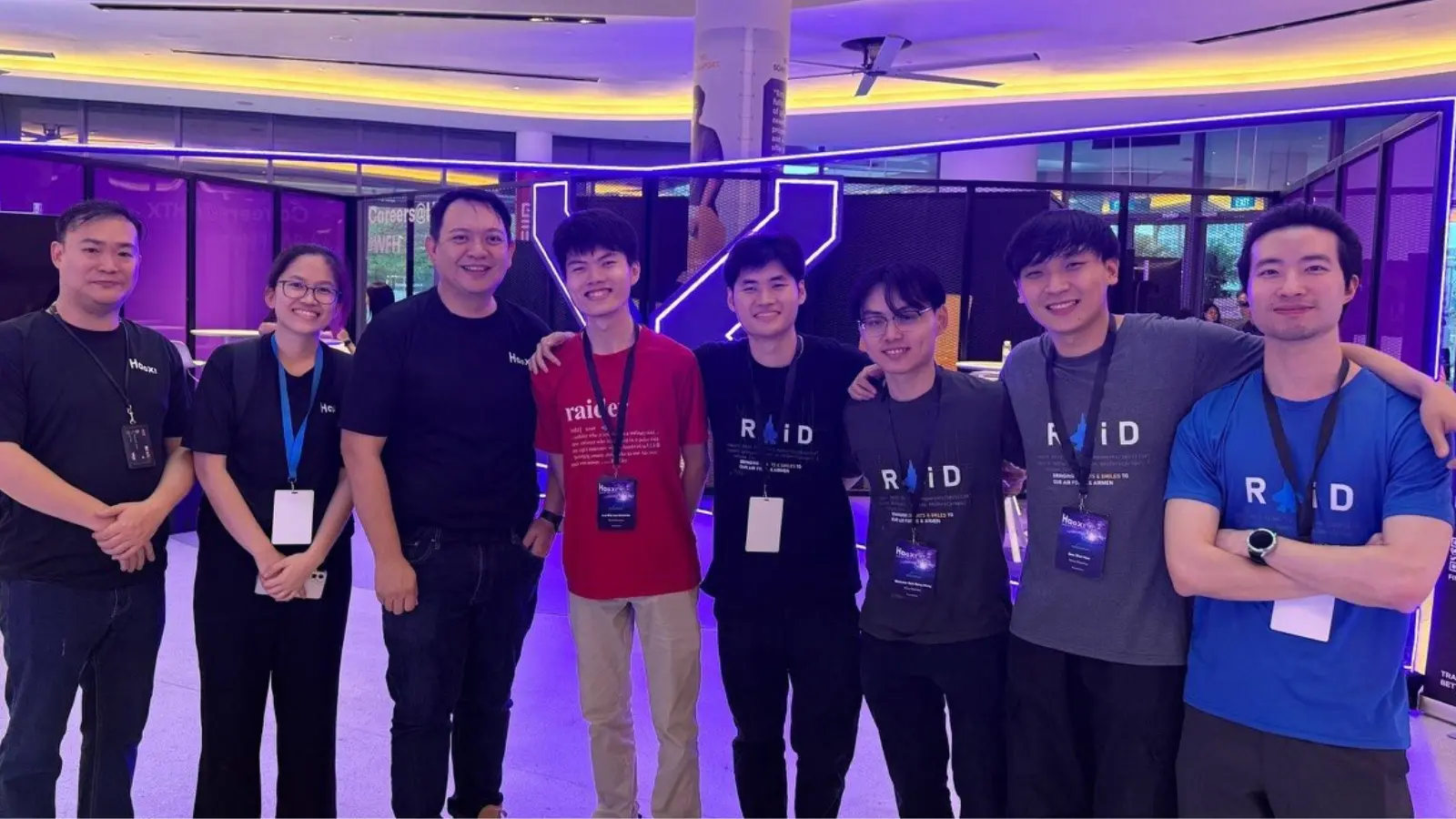
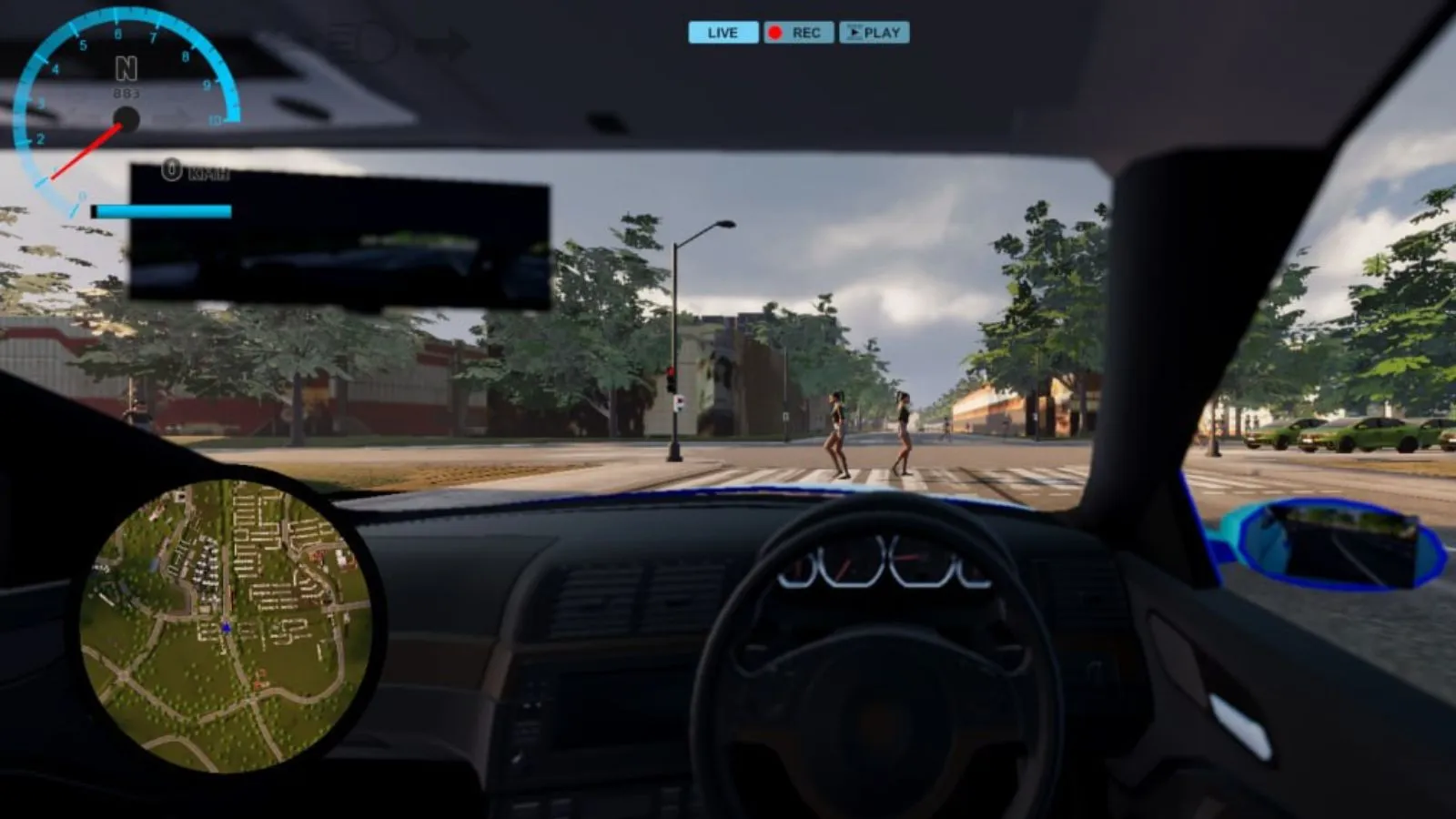
While working at AETHER, Wei Hao and a few fellow interns came across HacX! Hack for Public Safety 2025, which is a public safety hackathon organized by HTX, Microsoft, and Singapore University of Technology and Design. Wei Hao formed a team with his friends — including fellow RTIS student Low Yee Lei — and took part. For the hackathon, the team built PRISM (Police Response & Incident Simulation Module), an immersive driving simulator designed to enhance training for enforcement officers. PRISM recreates realistic operational scenarios in a safe, controlled virtual environment. The system features AI-controlled traffic, dynamic incidents, and realistic vehicle physics, enabling officers to train for situations such as high-speed pursuits or emergency lane changes that would otherwise be difficult, expensive, or unsafe to replicate in the real world.
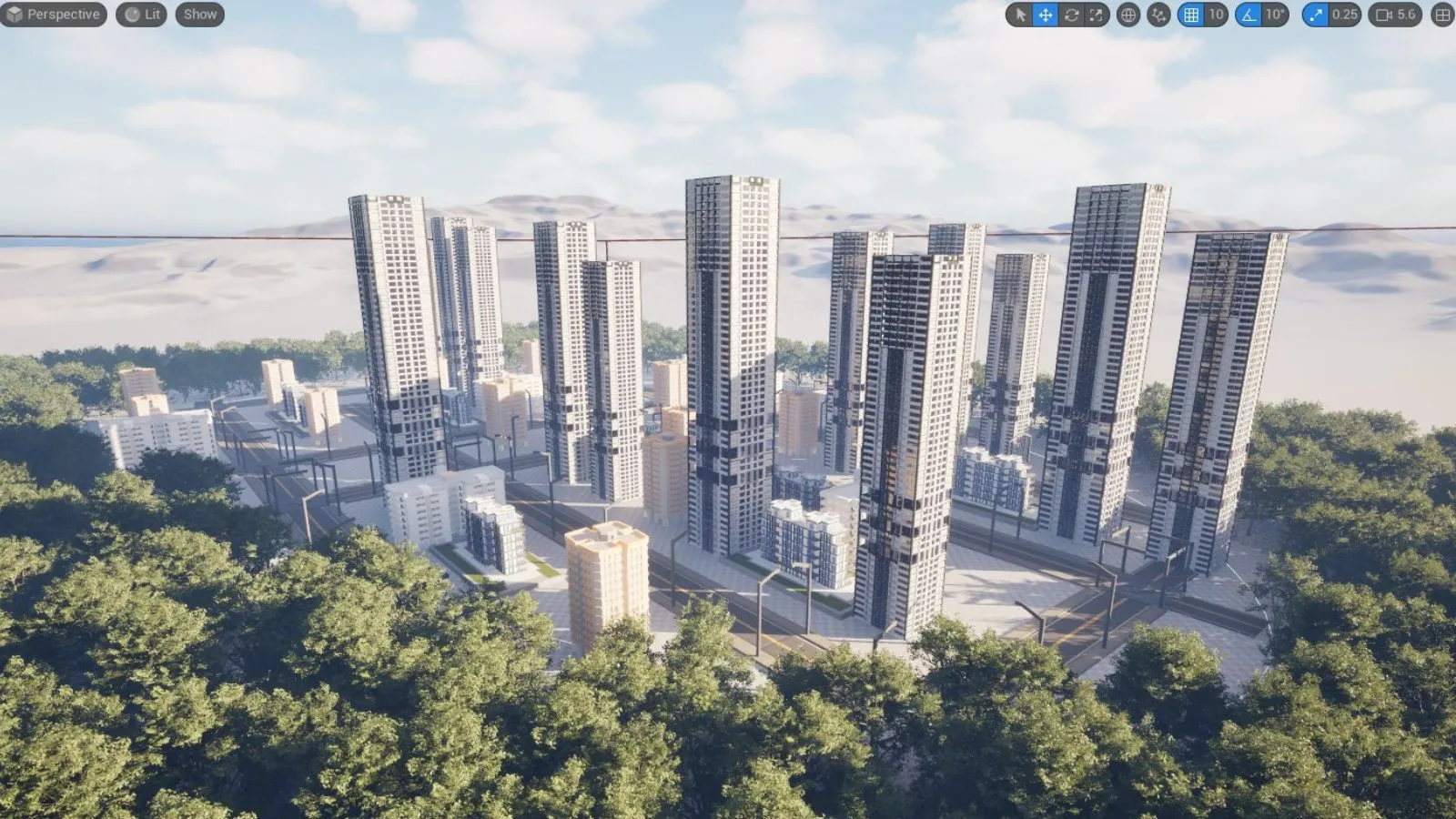
Wei Hao led the software architecture and simulation development, building core systems such as AI-driven vehicle behavior, dynamic event handling, and gameplay systems. The team also incorporated telemetry tracking — including heart rate, eye-tracking, and reaction-time data — which could be analyzed through a post-training dashboard for instructors to assess each trainee’s overall performance.
Taking part in HacX! further reinforced Wei Hao’s desire to pursue a future in simulations after seeing how they could be applied to real-world scenarios. “PRISM was the project that made me realize simulations are more than just interactive software,” Wei Hao says. “They can be used for training, evaluation, and decision-making.” The hackathon experience also proved pivotal in another way as it gave Wei Hao the chance to network with industry professionals and showcase his work, which eventually led to an interview and job offer at HTX.
Wei Hao officially joined HTX in July 2026 after completing his internship at AETHER. Today, his work involves both technical development and project management, collaborating with stakeholders to design and deliver simulation solutions that support operational readiness and training outcomes.
Reflecting on his journey in simulations so far, Wei Hao credits his DigiPen (Singapore) education for teaching him to build complete systems from the ground up and stay resilient when tackling unfamiliar problems. His advice for current students eyeing a similar path: stay open to new technologies and tech stacks, and use personal projects to explore what excites you most. As Wei Hao builds a career in this field, he hopes to deepen his expertise in AI, autonomous systems, and large-scale simulation platforms — technologies he believes will continue growing in importance for training, testing, and decision-making across industries.